This post contains Amazon affiliate links.
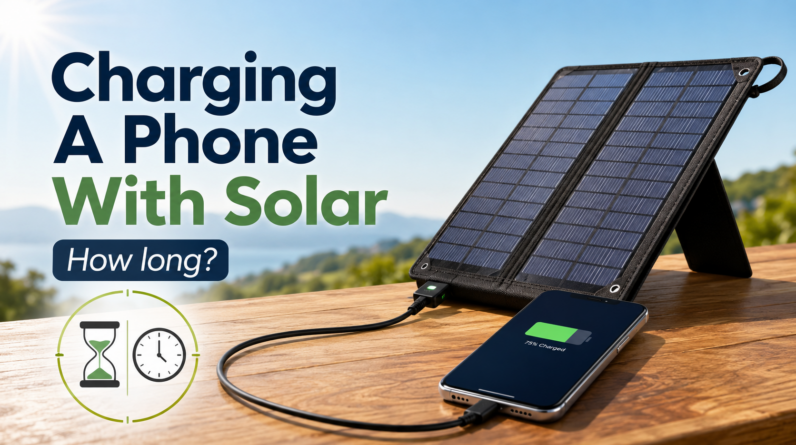
How Long Does It Take to Charge a Phone With a Solar Charger?
A solar charger can be a useful way to keep your phone powered when you are camping, traveling, or dealing with a power outage.
But solar charging is usually slower than plugging your phone into a wall outlet.
So, how long does it take to charge a phone with a solar charger?
In good sunlight, a portable solar panel may charge a phone in around 2 to 5 hours. Smaller solar chargers and solar power banks can take much longer, especially if the weather is cloudy or the panel is not receiving direct sunlight.
The actual charging time depends on the size of the solar panel, your phone battery, weather conditions, and the type of charger you are using.
How Fast Can a Solar Charger Charge a Phone?
There is no single charging speed for every solar charger.
A larger folding solar panel might generate enough power to charge a phone at speeds similar to a basic USB wall charger when conditions are good.
A tiny solar panel built into a power bank may produce only a fraction of that power.
As a general estimate:
- Small built-in solar power bank panel: many hours or even days
- 5-watt solar charger: roughly 4 to 8 hours
- 10-watt solar charger: roughly 3 to 6 hours
- 20-watt solar charger: roughly 2 to 4 hours
- Larger portable solar panel: potentially 2 to 3 hours under strong conditions
These are only rough estimates.
Solar output changes constantly throughout the day.
Why Does Solar Charging Take So Long?
Solar panels depend completely on the amount of sunlight hitting them.
A wall charger gets a steady supply of electricity.
A solar panel does not.
Clouds, shade, panel angle, temperature, and even the time of day can reduce how much electricity reaches your phone.
If the solar panel is rated at 20 watts, that does not mean it will produce 20 watts every minute of the day.
The rated output is generally based on favorable test conditions.
Real-world output is often lower.
Solar Panel Size Makes a Big Difference
One of the biggest factors affecting charging speed is the size of the solar panel.
Small Solar Power Bank Panels
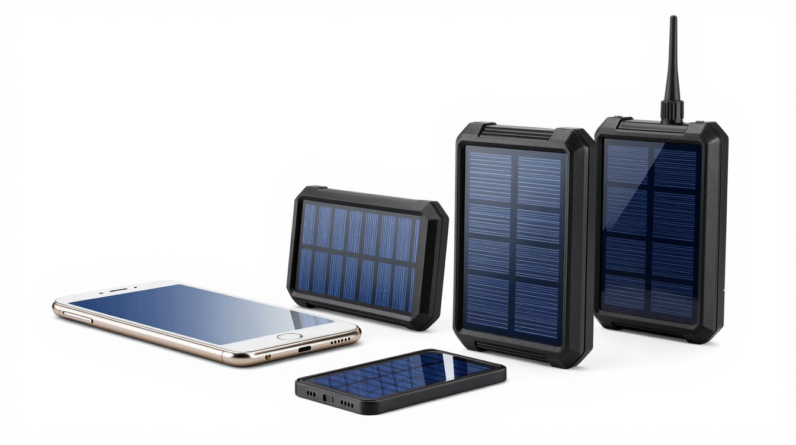
Many solar power banks have a small panel built into the front.
These devices are convenient, but the solar panel is often too small to recharge the battery quickly.
The solar panel may be best viewed as an emergency backup rather than the main charging method.
It can slowly add power during the day, but completely recharging the power bank from sunlight alone may take a very long time.
Folding Solar Chargers
Folding solar chargers have considerably more panel surface area.
They might unfold into two, three, or four separate panels.
Because they can collect more sunlight, they can generate more electricity.
If your main goal is keeping a phone charged during an extended power outage, a folding solar charger can be much more practical than a small single-panel power bank.
How Long Does It Take to Charge an iPhone With Solar Power?
Charging time varies depending on the iPhone model and the solar charger.
Newer phones generally have larger batteries than older models.
With a reasonably powerful solar panel and strong direct sunlight, an iPhone may charge in approximately 2 to 5 hours.
However, charging could take considerably longer if:
- The sky is cloudy
- The panel is partially shaded
- The panel is behind a window
- The sun is low in the sky
- The phone is being used while charging
- The solar charger produces limited power
If you are constantly using navigation, video, games, or other battery-heavy apps, your phone may consume power almost as quickly as the charger produces it.
How Long Does It Take to Charge an Android Phone With Solar Power?
The same basic rules apply to Android phones.
Many Android phones have batteries ranging from moderate to very large capacities.
A phone with a larger battery will generally require more energy to reach a full charge.
With a good portable solar charger under strong sunlight, charging may take around 2 to 5 hours.
With a weaker panel, charging could take most of the day.
Direct Solar Charging vs Charging a Power Bank First
There are two common ways to use solar power for a phone.
Method 1: Connect the Phone Directly to the Solar Panel
You connect your phone’s USB cable directly to the solar charger.
This can work well when sunlight is strong and steady.
The problem is that solar output can change whenever a cloud passes overhead.
Some phones may repeatedly stop and restart charging as the available power changes.
Method 2: Charge a Power Bank With Solar First
Another option is to connect the solar panel to a power bank.
The solar panel charges the battery during the day.
You can then charge your phone from the power bank whenever needed.
For emergency preparedness, this method can be more convenient because the power bank stores the energy for later.
You do not have to leave your phone connected to a solar panel outside for several hours.
Can a Solar Charger Fully Charge a Phone in One Day?
Yes, a good portable solar charger can often provide enough electricity to charge a phone in one sunny day.
A small solar power bank may struggle to do the same.
The larger the solar panel, the easier it becomes to collect enough energy.
If you expect to rely heavily on solar power, look at the panel’s wattage instead of only looking at the capacity of the battery.
A giant power bank with a tiny solar panel can store a lot of electricity, but the solar panel may take days to replace that power.
What Happens on a Cloudy Day?
Solar panels still work when the sky is cloudy.
They just produce less electricity.
Depending on the cloud cover, output can drop significantly.
Your phone may continue charging, but the process could be much slower.
Instead of taking a few hours, charging might take most of the day.
Heavy clouds could reduce output enough that the charger struggles to keep up with your phone’s normal battery use.
Does a Solar Charger Work in the Shade?
A solar charger may produce some electricity in bright shade, but performance will usually drop substantially.
For best results, the panels should receive direct sunlight.
Even partial shade can affect solar output.
A tree branch, backpack, tent, or building shadow covering part of the panel can reduce charging performance.
Check the panel occasionally as the sun moves throughout the day.
A spot that was sunny at 10 a.m. may be shaded by noon.
Can You Charge Your Phone Through a Window?
You can sometimes charge a phone using a solar panel placed behind a sunny window.
However, charging will generally be slower than placing the panel outside.
Window glass blocks and reflects part of the sunlight.
Tinted and energy-efficient windows may reduce solar performance even further.
If you have access to a safe outdoor location, putting the solar charger outside will usually produce better results.
Does the Angle of the Solar Panel Matter?
Yes.
The panel will generally produce more electricity when sunlight strikes it more directly.
Laying the panel flat on the ground may not provide the best results.
Try tilting it toward the sun.
You may also need to adjust the panel several times during the day.
This can make a noticeable difference when you are trying to collect as much power as possible.
Should You Turn Your Phone Off While Solar Charging?
You do not have to, but turning the phone off can help it reach a full charge faster.
Even when you are not actively using your phone, it is consuming electricity.
Apps may run in the background.
The phone may search for cellular service.
Notifications, location services, Bluetooth, and Wi-Fi can all use battery power.
If you need to conserve power during an emergency, you can also use airplane mode while charging.
That allows more of the incoming electricity to go toward filling the battery.
How Can You Make Solar Charging Faster?
A few simple changes can improve charging performance.
Use Direct Sunlight
Place the solar panel in an open location where it receives direct sunlight.
Keep the Panel Clean
Dust, dirt, sand, and debris can reduce the amount of sunlight reaching the solar cells.
Wipe the panel clean when needed.
Use a Larger Panel
If you regularly depend on solar power, upgrading from a tiny solar panel to a larger folding charger can make a major difference.
Angle the Panel Toward the Sun
Position the panel so sunlight hits it as directly as possible.
Stop Using the Phone While Charging
Watching videos, gaming, using GPS, or making long calls can slow down charging.
Use Airplane Mode
Airplane mode reduces power consumption and can help the battery charge faster.
Charge a Power Bank During the Day
Store solar energy while sunlight is available and charge your phone later.
How Much Solar Power Do You Need to Charge a Phone?
You do not need a huge solar panel to charge a smartphone.
A small portable panel can do the job.
However, having additional wattage gives you more flexibility when conditions are not perfect.
A 10-watt or 20-watt portable solar charger can be useful for basic phone charging.
A larger panel may be worth considering if you also want to charge tablets, multiple phones, power banks, lights, radios, or other emergency devices.
Is a Solar Power Bank Enough for a Power Outage?
A solar power bank can be useful during a short power outage.
If it starts fully charged, it may provide several phone charges depending on its capacity.
For a longer outage, the small built-in solar panel may not replace electricity quickly enough.
A separate folding solar panel gives you much more charging surface area.
A practical emergency setup might include:
- One or two charged power banks
- A portable solar panel
- USB charging cables
- A car charger
- A wall charger
- A battery-powered or hand-crank radio
This gives you several ways to keep your phone operating if household electricity is unavailable.
Should You Depend on Solar Charging Alone?
Probably not.
Solar charging is useful, but weather can be unpredictable.
You may have several cloudy or rainy days during the exact emergency that causes the power outage.
Before severe weather arrives, charge your phone and power banks from a wall outlet.
Use solar charging to extend the amount of time you can remain without grid electricity.
That approach gives you stored power immediately while still allowing you to generate additional electricity if the outage continues.
Frequently Asked Questions
How many hours does it take a solar charger to charge a phone?
A good portable solar charger may charge a phone in around 2 to 5 hours in strong sunlight. Smaller chargers can take much longer.
Can a 10-watt solar panel charge a phone?
Yes. A 10-watt solar panel can charge many smartphones, although actual charging speed depends on sunlight and the charger’s output.
Can a 20-watt solar panel charge a phone?
Yes. A 20-watt solar charger can provide plenty of power for many smartphones when sunlight conditions are good.
Why is my solar charger charging my phone so slowly?
Weak sunlight, clouds, shade, poor panel angle, dirty panels, or a low-powered solar charger can all slow charging.
Can I leave my phone connected to a solar charger all day?
You can, but avoid leaving the phone somewhere it may overheat in direct sunlight. Keeping the phone shaded while the solar panel remains in the sun can be a better setup.
Is it better to charge a phone or power bank with a solar panel?
Both can work. Charging a power bank first gives you the ability to store solar energy and use it later, which can be particularly helpful during outages.
How Long Should You Expect Solar Phone Charging to Take?
For most people using a decent portable solar charger, 2 to 5 hours of good sunlight is a reasonable general estimate for charging a phone.
That time can increase significantly with a small solar panel, cloudy weather, shade, or poor positioning.
If you are buying a solar charger for emergencies, pay attention to panel wattage and not just battery capacity.
A larger panel can collect more electricity during the limited hours of strong daylight, making it much easier to keep your phone running during a prolonged outage.
phone charging time, how fast do solar chargers work, charge phone with solar panel, solar charger for phone, how long solar charger takes
This post contains Amazon affiliate links.