This post contains Amazon affiliate links.
Solar Generator for Freezer: Can It Keep Food Frozen During an Outage?
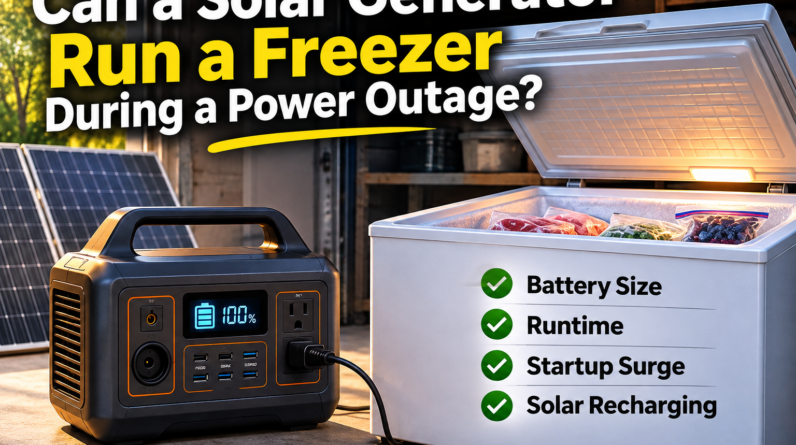
A solar generator for freezer backup can keep your frozen food cold when the power goes out. The key is choosing a power station with enough battery capacity and enough inverter output to handle the freezer compressor when it starts.
A solar generator for freezer use can be especially helpful during hurricanes, storms, grid failures, and multi-day outages. Smaller units may provide only a few hours of backup, while larger 1,000Wh to 2,000Wh power stations can keep many freezers running much longer.
Solar panels can extend that runtime by recharging the battery during daylight.
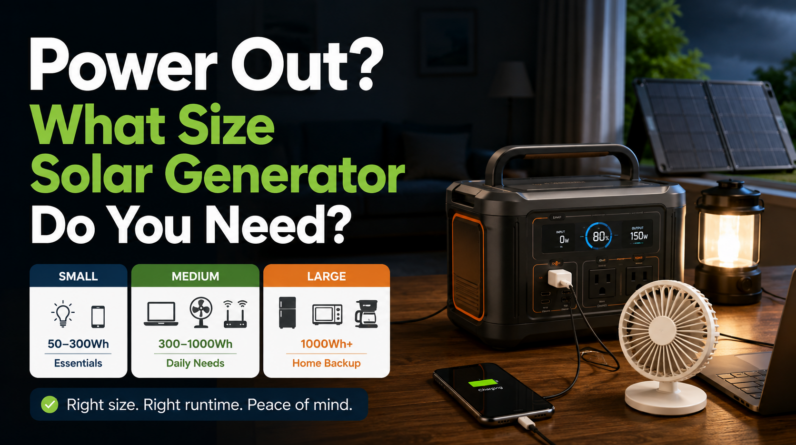
If you are still deciding how much battery capacity you need, start with our guide to what size solar generator you need for a power outage.
If you are still deciding how much battery capacity you need, start with our guide to what size solar generator you need for a power outage.
Quick Freezer Backup Comparison
| Solar Generator Size | Best Use |
|---|---|
| 300Wh to 500Wh | Short-term backup for some small freezers |
| 500Wh to 1,000Wh | Several hours to overnight backup |
| 1,000Wh to 2,000Wh | Longer freezer backup |
| 2,000Wh+ | Multi-day backup and additional devices |
| Battery plus solar panels | Best option for extended outages |
These are general ranges.
Actual runtime depends on the freezer’s energy consumption, room temperature, battery efficiency, and how often you open the freezer.
How Much Electricity Does a Freezer Use?
Freezer power consumption varies widely.
Factors include:
- Freezer size
- Chest freezer or upright freezer
- Age
- Energy efficiency
- Room temperature
- Thermostat setting
- How full the freezer is
- How often the door or lid is opened
The compressor does not normally run continuously.
It turns on when cooling is needed and shuts off when the freezer reaches the desired temperature.
Because of this, daily energy consumption is more useful than simply looking at running watts.
Chest Freezer vs Upright Freezer
Chest freezers can be very efficient during a power outage.
Cold air is heavier than warm air.
When you open the top of a chest freezer, much of the cold air stays inside.
An upright freezer loses more cold air when you open the door.
That does not mean every chest freezer uses less electricity than every upright model, but a chest freezer can be a good choice for emergency food storage.
Why Startup Surge Matters
A freezer compressor may briefly draw considerably more power when it starts.
Your solar generator needs enough inverter capacity to handle this surge.
For example, a freezer might consume only a few hundred watts while operating but require significantly more for a brief moment when the compressor starts.
Check the power station’s:
- Continuous AC output
- Surge output
- Battery capacity
A unit can have plenty of battery capacity and still fail to start the freezer if its inverter is too small.
How Do You Calculate Freezer Runtime?
If you know the freezer’s average wattage, you can estimate runtime with:
Usable battery watt-hours ÷ average watts = approximate hours
Suppose a freezer averages 50 watts over time and your battery provides about 900Wh of usable energy.
900 ÷ 50 = 18 hours
Actual runtime may be different.
Another method is to use daily energy consumption.
Suppose your freezer uses 600Wh per day.
A battery providing 1,200Wh of usable electricity could theoretically run it for:
1,200 ÷ 600 = 2 days
Real-world runtime will be lower because of system losses.
How Can You Find Your Freezer’s Actual Energy Use?
The most accurate approach is to measure it.
You can use a plug-in electricity meter to monitor the freezer for 24 hours or longer.
That tells you how many watt-hours or kilowatt-hours the freezer actually consumes in your home.
You can also check:
- Appliance EnergyGuide label
- Manufacturer specifications
- Owner’s manual
Actual measurement is better because your temperature, freezer age, and usage habits affect consumption.
Can a 300Wh Solar Generator Run a Freezer?
Possibly, but runtime may be limited.
A 300Wh power station is better suited to phones, lights, laptops, routers, and other small devices.
It may operate an efficient freezer for a few hours if the inverter can handle the compressor startup.
For serious freezer backup, a larger battery is usually more practical.
Can a 500Wh Solar Generator Run a Freezer?
Yes, many 500Wh power stations can run a freezer.
Runtime may range from several hours to longer depending on the freezer.
This size can be useful for a short outage.
For overnight or multi-day backup, 1,000Wh or more gives you more breathing room.
Can a 1,000Wh Solar Generator Run a Freezer?
A 1,000Wh power station is a strong starting point for freezer backup.
Suppose your freezer consumes around 500Wh per day.
A 1,000Wh battery could theoretically provide close to two days before accounting for losses.
If the freezer consumes 800Wh per day, runtime would be much shorter.
This is why measuring actual consumption matters.
Can a 2,000Wh Solar Generator Run a Freezer?
Yes.
A 2,000Wh battery can provide substantial freezer backup.
For an efficient freezer, you may get multiple days of runtime.
A battery this size also gives you enough reserve for other devices.
You might also power:
- Refrigerator
- Phones
- Router
- Lights
- Laptop
- Fans
If you need to run both a refrigerator and freezer, see our guide to solar generator backup for food preservation and refrigerator power.
Can a 3,000Wh Solar Generator Run a Freezer for Several Days?
Often, yes.
A 3,000Wh system gives you much more stored electricity.
If your freezer uses 600Wh per day, three days would consume:
600 × 3 = 1,800Wh
That leaves capacity for losses and other devices.
If you also recharge with solar panels, you may be able to keep the freezer operating much longer.
Can One Solar Generator Run a Refrigerator and Freezer?
Yes, if it is large enough.
Suppose:
- Refrigerator uses 800Wh per day
- Freezer uses 600Wh per day
Combined:
1,400Wh per day
A 1,000Wh power station would probably not cover a full day.
A 2,000Wh or larger battery would be much more useful.
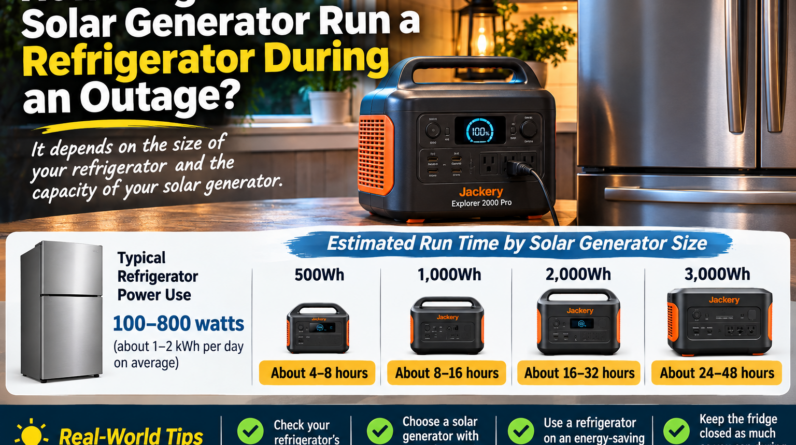
Our article on how long a solar generator can run a refrigerator can help you estimate the refrigerator side of the equation.
How Much Solar Do You Need for a Freezer?
That depends on how much electricity the freezer uses each day.
If your freezer consumes 600Wh daily, you need solar production capable of replacing roughly that amount, plus charging losses and any other loads.
A 100W panel may help.
A 200W or 400W array gives you more margin.
Is a 100W Solar Panel Enough?
Possibly for an efficient freezer under good solar conditions, but it may be tight.
If the panel produces less electricity than the freezer uses each day, the battery will gradually drain.
For a better idea of what 100 watts can do, see what a 100-watt solar panel can power during an emergency.
Is a 200W Solar Panel Better for Freezer Backup?
Yes.
A 200W panel can collect substantially more energy during the day.
That makes it easier to replace the electricity used overnight.
See what a 200-watt solar panel can power during an emergency.
Is 400W Better for a Freezer?
For long outages, 400 watts of solar can be much more useful.
A 400W setup may produce enough electricity for:
- Freezer
- Phones
- Lights
- Router
- Laptop
during favorable conditions.
Our guide to what a 400-watt solar panel can power covers larger emergency loads.
What About 800W of Solar?
An 800W system gives you much more flexibility.
It can support both refrigeration and other household needs.
See what an 800-watt solar panel system can power during an emergency.
Can Solar Panels Keep a Freezer Running Indefinitely?
Potentially, yes.
If your solar panels replace at least as much electricity as the freezer uses each day, the system can continue operating for a long time.
For example:
Freezer consumption:
600Wh per day
Solar production:
900Wh per day
In theory, you have enough daily production to cover the freezer and some system losses.
Cloudy weather can change that quickly.
What Happens During Several Cloudy Days?
Solar output can drop dramatically.
That is why battery capacity matters just as much as solar panel size.
A larger battery stores extra energy from sunny days and gives you a reserve when conditions are poor.
For long outages, think of the battery and solar panels as one system.
Does a Full Freezer Use Less Energy?
A full freezer can hold its temperature better than an almost empty one.
Frozen food helps keep neighboring items cold.
If you have extra space before a predicted outage, freezing containers of water can add thermal mass.
Do not fill containers completely because water expands when it freezes.
Should You Freeze Water Before a Storm?
This can be useful.
Frozen water bottles can help the freezer stay cold longer if power is interrupted.
They can also be moved into a refrigerator or cooler if necessary.
Preparing the freezer before the storm reduces how hard your backup system has to work.
Should You Turn the Freezer Colder Before an Outage?
If severe weather is expected, cooling the freezer thoroughly beforehand can provide additional thermal reserve.
Do not use settings outside the manufacturer’s recommended range.
The goal is simply to start the outage with everything fully frozen.
Keep the Freezer Closed
This is one of the easiest ways to protect your food and conserve battery power.
Every time you open the freezer, warm air enters.
That forces the compressor to work harder.
During an outage:
- Decide what you need before opening it
- Open it quickly
- Close it immediately
- Avoid unnecessary checks
How Long Does Food Stay Frozen Without Power?
A properly packed freezer can stay cold for a surprisingly long time if it remains closed.
But conditions vary.
Room temperature, freezer type, fullness, and door openings all affect how quickly temperatures rise.
A thermometer inside the freezer can help you monitor conditions instead of guessing.
Should You Run the Freezer Continuously?
If you have enough battery capacity, continuous normal operation is simplest.
Some people try cycling the freezer on and off manually to save electricity.
That can work, but food temperature matters more than battery savings.
Use a thermometer if you plan to cycle the freezer.
Do not rely on guesswork.
Can You Run the Freezer Only During the Day?
If your solar array is large enough, you might operate the freezer heavily during daylight while solar production is strong.
The freezer’s stored cold can then help carry it through the night.
However, this strategy depends on:
- Freezer insulation
- Food load
- Room temperature
- Solar production
A battery still gives you much more flexibility.
Does Hot Weather Increase Freezer Power Use?
Yes.
A freezer located in a hot garage may work much harder than one inside an air-conditioned room.
During a summer outage, garage temperatures can climb significantly.
That means a freezer that normally uses 500Wh per day might use considerably more.
Build some extra battery capacity into your calculations.
Is a Garage Freezer Harder to Back Up?
It can be.
Garages often become very hot during summer.
That causes the compressor to run more frequently.
A garage freezer may therefore require more emergency electricity than the same model in a cooler indoor location.
Can a Solar Generator Stay Next to the Freezer?
Usually, but give it ventilation.
Do not block cooling vents.
Keep the battery:
- Dry
- Out of direct sunlight
- Away from extreme heat
- Protected from physical damage
Follow the manufacturer’s placement instructions.
Should You Use an Extension Cord?
If you must use one, choose a properly rated cord suitable for the freezer’s electrical load.
A long, undersized extension cord can create voltage drop and heat.
Whenever possible, place the power station close enough to use the freezer’s normal cord.
Can a UPS Run a Freezer?
Most small consumer UPS units are not ideal for freezer backup.
A freezer needs both startup surge capability and substantial battery capacity.
A portable power station is generally better suited to the job.
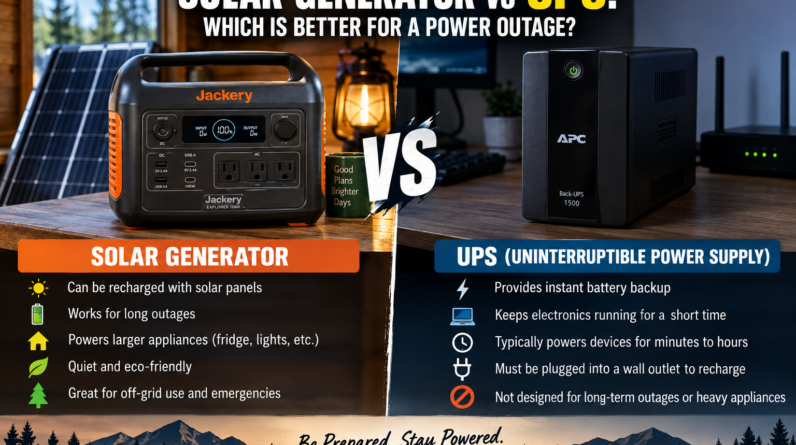
For more information, see Solar Generator vs UPS: Which Is Better for a Power Outage?.
Can You Run a Freezer in an Apartment With a Solar Generator?
Yes.
A battery power station can be especially useful in an apartment because it does not produce engine exhaust.
If you live in a smaller space, see our guide to the best solar backup power setup for apartment dwellers.
What If You Also Need a CPAP?
CPAP machines usually consume much less electricity than a freezer, but they still reduce battery runtime.
If you need both, calculate the combined daily load.
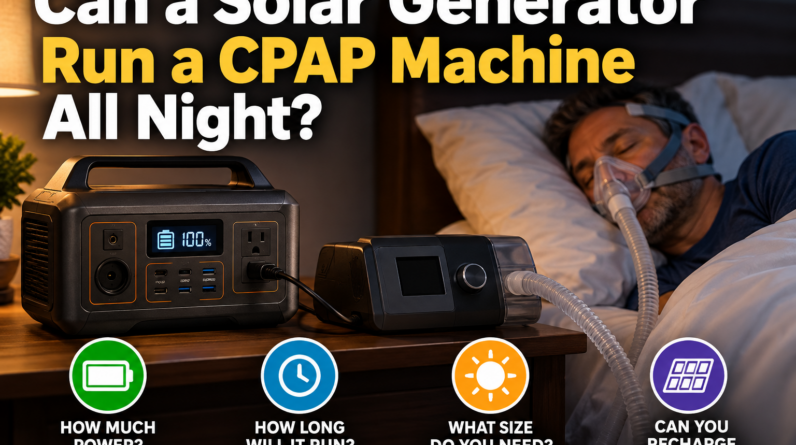
For CPAP planning, read Can a Solar Generator Run a CPAP Machine All Night?.
What Size Solar Generator Should You Buy?
A simple starting point is:
500Wh
Best for short freezer outages.
1,000Wh
Good starting point for overnight or longer backup.
2,000Wh
Better for multi-day outages or refrigerator plus freezer backup.
3,000Wh and Larger
Better for extended outages and several household loads.
Your actual freezer consumption should determine the final choice.
Best Setup for a One-Day Outage
For a one-day outage, a setup might include:
- 1,000Wh power station
- Fully frozen freezer
- 100W to 200W solar panel
- Minimal additional loads
An efficient freezer may require even less.
Best Setup for a 3-Day Outage
For three days, consider:
- 2,000Wh or larger battery
- 200W to 400W solar array
- Freezer thermometer
- Reduced door openings
- Backup charging method
Solar becomes much more useful once the outage extends beyond the battery’s stored capacity.
Best Setup for a Week-Long Outage
For a week or longer, focus on producing enough solar electricity each day to replace what the freezer uses.
That may mean:
- Larger battery
- 400W or more solar
- Careful power management
- Alternative charging source
A battery without recharging eventually becomes empty.
Solar turns the battery into a renewable emergency power system.
Test the Freezer Before an Emergency
Do not wait for a storm.
Plug your freezer into the power station and test it.
Check:
- Does the compressor start?
- Does the inverter handle the surge?
- How much battery is used in 6 hours?
- How much is used in 12 hours?
- How much remains after 24 hours?
This gives you a much better estimate than any online calculator.
Measure a Full 24 Hours
If possible, run the test for a complete day.
Freezer power consumption changes as temperatures and compressor cycles change.
A 24-hour measurement gives you a much more useful number for emergency planning.
How to Choose A Solar Generator for Freezer Backup
When choosing a solar generator for freezer backup, focus on battery capacity, continuous output, and surge power. The battery should store enough energy to cover your freezer’s daily use, while the inverter must be able to handle the brief startup surge when the compressor turns on. A 1,000Wh to 2,000Wh power station is a good starting range for many freezers, but the right size depends on your appliance’s actual energy consumption. If you expect longer outages, choose a model that can recharge from solar panels so you can replace some of the electricity used each day and keep the freezer running longer.
Frequently Asked Questions
Can a solar generator run a freezer?
Yes. A properly sized portable power station can run many chest and upright freezers.
How big of a solar generator do I need for a freezer?
A 500Wh unit may work for short outages. A 1,000Wh to 2,000Wh system is more useful for longer outages.
How long will a 1,000Wh power station run a freezer?
It depends on freezer consumption. An efficient freezer may run for a day or longer, while a higher-consumption model will drain the battery faster.
Can a 500Wh power station run a freezer overnight?
Possibly. The freezer must also have a startup surge that falls within the inverter’s capabilities.
Can one solar generator power a refrigerator and freezer?
Yes, if the battery and inverter are large enough to support both appliances.
What size solar panel do I need for a freezer?
A 200W to 400W system is a useful range for many emergency setups. Actual requirements depend on daily freezer consumption and sunlight.
Is a chest freezer easier to run from solar?
Often, chest freezers can be efficient because they retain cold air well when opened. Actual energy use varies by model.
Can solar power keep a freezer running for several days?
Yes. If your panels generate enough energy to replace what the freezer uses each day, solar can greatly extend your runtime.
Is a Solar Generator Worth It for Freezer Backup?
If you keep a significant amount of food in your freezer, backup power can prevent a costly loss during a prolonged outage.
For short outages, a 500Wh to 1,000Wh power station may be enough.
For longer outages, 1,000Wh to 2,000Wh or more provides much more flexibility.
Adding solar panels can extend runtime from hours or days to much longer periods if weather conditions cooperate.
The most useful thing you can do is measure your freezer’s real energy consumption before buying a system.
Once you know how many watt-hours it uses per day, choosing the right battery becomes much easier.
If you also need refrigerator backup, read How Long Will a Solar Generator Run a Refrigerator During an Outage? and Solar Generator for Emergency Food Preservation and Refrigerator Power.
This post contains Amazon affiliate links.