This post contains Amazon affiliate links.
Solar Navigation backup power for boats: key benefits and use cases
Key benefits of solar navigation backup power for boats
- Always-on guidance: Keep GPS, AIS, radar, and chartplotters running when the main bank drops.
- Clear calls and alerts: Power your VHF, AIS, and DSC so you can call for help at any time.
- Fuel savings: Cut engine idling and genset time. Let the sun top up the battery while you relax.
- Quiet and clean: No fumes. No noise. Just steady, green energy.
- Battery health: Solar can float-charge your backup bank. This reduces deep drains and adds life.
- Light weight and simple: Modern panels and LiFePO4 batteries save space and weight.
- Low upkeep: Few moving parts. Wipe, check, and sail.
- Redundancy: A second, isolated power path for your most critical gear.
Core system pieces for reliable backup
Panels that fit your boat
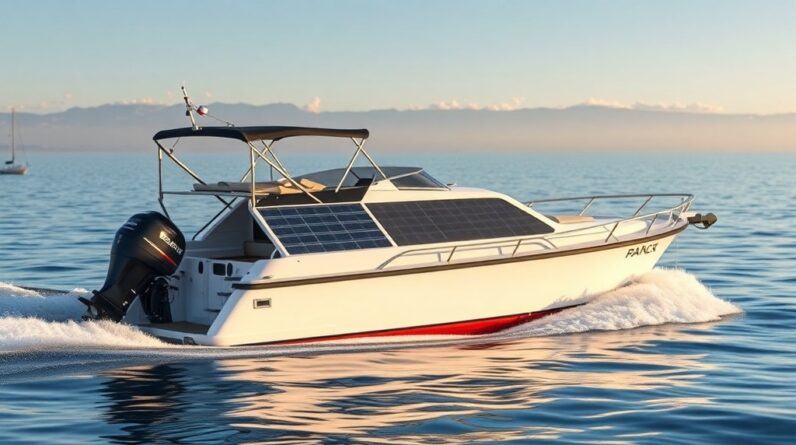
Pick marine-grade mono panels for best output. Rigid panels work well on arches and hard tops. Flexible panels suit biminis and curved decks. Aim for 100–400 watts for small to mid boats. More watts give you faster top-ups and depth for cloudy days.
Charge controller that protects
Use an MPPT controller. It harvests more power than PWM in low light and heat. Make sure it has a marine rating, temp sensing, and proper fusing. Set profiles for AGM or LiFePO4 as needed.
Backup battery that you can trust
Choose a dedicated bank for nav loads. AGM is simple and safe. LiFePO4 is light and long lasting. Size it for one to two days of your nav needs with buffer.
Wiring, fuses, and breakers
Use tinned marine wire, heat-shrink crimps, and proper strain relief. Add fuses close to the battery and controller. Label every run. Keep a tidy bus bar and a clear diagram on board.
Mounts and hardware
Use strong mounts that handle wind and spray. Add tilt if you can. Avoid shade from boom, bimini bows, radar, or flags.
Monitoring and alerts
A small battery monitor helps a lot. Watch volts, amps, and state of charge. Set low-voltage alerts so you act before gear shuts off.
Quick sizing guide
- List your nav loads:
- GPS/Chartplotter: 1–3 A
- VHF + AIS: 1–4 A (more when transmitting)
- Autopilot: 2–6 A (varies with sea state)
- Radar: 2–6 A (intermittent)
- Add run time. Example: Plotter 8 h, VHF 8 h (low), AIS 8 h, Autopilot 4 h.
- Calculate amp-hours (Ah). Example total: about 40–70 Ah per day.
- Size the backup bank for 1.5–2 days. Example: 80–140 Ah usable.
- Pick solar watts. Use: Daily Ah × 13 V ÷ sun hours ÷ 0.75. For 60 Ah and 5 sun hours: 60 × 13 ÷ 5 ÷ 0.75 ≈ 208 W. Round up to 250–300 W.
- Add margin for clouds and shade. More margin means less stress.
Practical use cases on the water
- Coastal sailing: Keep the chartplotter, depth, and AIS on during long daylight hops. Save the start battery for the engine.
- Overnight at anchor: Run anchor light, AIS, and a small tablet nav app without draining the house bank.
- Offshore passages: Split risk. House bank feeds fridges and lights. Solar Navigation backup power for boats feeds core nav and comms.
- Fishing trips: Power sonar and GPS all day without running the motor just to charge.
- Charter fleet care: A simple solar backup keeps guests safe if they run the main bank low.
- Small sailboats and tenders: A compact panel and a small battery keep a handheld VHF and a phone or tablet charged.
Installation and setup tips
- Plan the wire runs first. Keep them short and protected.
- Place the controller close to the battery for best voltage control.
- Use drip loops and gland seals to block leaks.
- Bond and ground as your boat manual states.
- Set the controller profile to your battery type.
- Test each circuit before you tidy up.
- Make a laminated diagram and keep it near the panel.
Care, safety, and longevity
- Rinse salt and wipe panels often. Salt film cuts power.
- Check bolts and mounts each month.
- Inspect wires for chafe. Add loom where needed.
- Update firmware for smart controllers if offered.
- Set a low-voltage cut-off for critical loads to save the battery.
- Stow a spare fuse kit, spare MC4s, and a small crimper on board.
Common mistakes to avoid
- Undersized array: Too few watts will not keep up on cloudy days.
- No MPPT: PWM can waste power in heat and partial shade.
- No isolation: Do not tie the backup bank to the house bank without a proper isolator.
- Skipping fuses: Always fuse the positive leg near the source.
- Shaded panels: A small shadow can slash output. Move flags and lines.
- Poor wire size: Thin wire causes voltage drop and heat. Use the right gauge.
Budget and value snapshot
Costs vary by size and parts. A simple 100–150 W kit with an AGM battery may run a few hundred dollars. A 300–400 W setup with MPPT and a LiFePO4 bank may cost more, but it lasts longer and saves fuel. The real value is safety. With Solar Navigation backup power for boats, you can see, steer, and call when it matters most.
Simple setup checklist
- Define critical loads: GPS, AIS, VHF, autopilot, radar.
- Pick panel watts with 20–40% buffer.
- Choose an MPPT controller with marine features.
- Select a battery sized for 1.5–2 days of use.
- Plan mounts to avoid shade and flex.
- Install tinned wire, fuses, and labels.
- Test and record baseline volt/amps at noon sun.
- Review output each trip and adjust as needed.
Pro tips for extra reliability
- Split the array into two strings on separate controllers. If one fails, the other runs.
- Add a small dedicated DC panel for nav gear only. This keeps loads clear and simple.
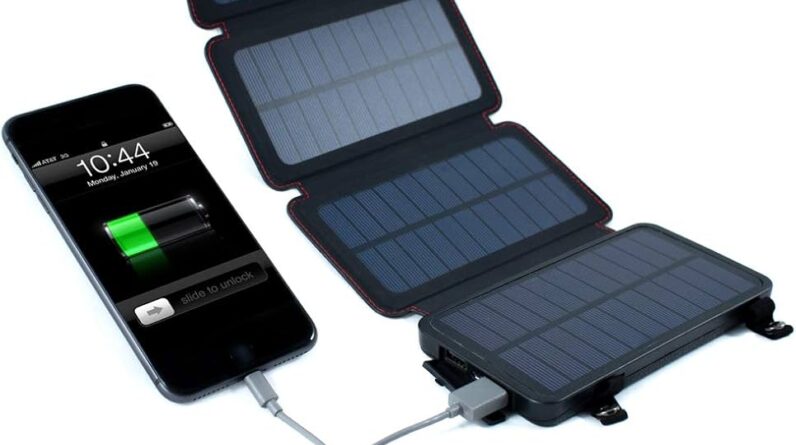
- Carry a folding panel as a spare. It can clip to the backup bank in an emergency.
- Use a low-power nav mode at night. Dim screens and turn off non-critical loads.
- Log your daily amp-hours. You will spot problems early.
When you plan for the worst, you sail your best. With Solar Navigation backup power for boats, your key tools stay on. You keep your heading, your voice, and your peace of mind, even when the main system goes dark.
Core components: panels, charge controllers, batteries, and wiring for nav systems
Reliable Solar Navigation backup power for boats
You need your nav gear to stay on when the sky turns gray. Solar Navigation backup power for boats gives you that safety net. It keeps your chartplotter, AIS, GPS, VHF, and lights alive when the main engine sleeps. It works in silence. It does not drink fuel. With the right setup, you get steady power day after day, even at anchor or on a long passage.
Panels that keep you moving
Solar panels turn sun into steady DC power. The right panel plan makes Solar Navigation backup power for boats simple and strong.
Types and placement
- Rigid glass panels: Best output per square foot. Mount on a stern arch, davits, or a hard top. They last long and handle heat well.
- Semi-flex panels: Light and low profile. Good on biminis. Use a backer and airflow gaps to limit heat and extend life.
- High-efficiency cells: Pick monocrystalline cells with bypass diodes to reduce shade loss from a boom or radar post.
Keep panels clear of shade. Angle helps, but flat is fine on boats. Use a mirror-finish deck or white backing to lower heat. Pick marine-grade frames and UV-safe sealants.
Sizing quick math
First, add your nav loads:
- Chartplotter: 15–25 W
- AIS: 4–8 W
- GPS puck: 1–2 W
- VHF on standby: ~6 W, more while TX
- Autopilot (small boat): 24–60 W on average
- Radar (intermittent): 30–60 W while active
- LED nav lights: 3–10 W total
Example: Your watch load sits near 60 W. For 8 hours, that is 480 Wh. In a sunny day with 5 peak sun hours, a 150 W panel can make about 600–700 Wh after system losses. Add 20–30% headroom for clouds and shade. Two 100 W panels give a good buffer. This simple math helps you size Solar Navigation backup power for boats that fits your route and season.
Smart charge control
A charge controller protects your battery and boosts harvest. It is the brain of your solar system.
PWM vs MPPT
- PWM: Low cost and simple. Best when panel voltage matches battery voltage.
- MPPT: Higher yield, 10–30% more in cool or cloudy light. Great when panel voltage is higher than battery voltage.
For tight space and mixed shade, MPPT is worth it. Look for a marine charge controller with temp sensor, remote display, and sealed case (IP65+).
Settings that protect nav gear
- Set correct battery type (AGM, Gel, Flooded, or LiFePO4).
- Use the temp sensor on the battery, not the controller, for safe charging.
- Enable load disconnect if you power small devices off the controller. This saves the bank from deep drain.
Batteries that do the heavy lift
The battery stores your sun power for night watches and storm days. Pick a quality marine battery that matches your needs.
Chemistry choices
- AGM: Tough and sealed. Good value. Plan to use only 50% of rated capacity for long life.
- Gel: Stable but needs careful charging. Less common today.
- LiFePO4: Light, fast charge, deep cycles. Needs a BMS and proper low-temp charge control. Great for frequent use.
Right capacity and depth of discharge
Size for one to two days of nav loads without sun. If you need 480 Wh per day, aim for at least 1,000 Wh of usable energy. That is about 80 Ah at 12.8 V with LiFePO4 (since you can use 80–90%), or 160–200 Ah with AGM (since you use 50%). This buffer makes Solar Navigation backup power for boats steady and stress-free.
Safety and mounting
- Vent lead-acid banks. Secure with hold-downs. Keep above bilge water.
- Use proper bus bars, not battery posts, for many take-offs.
- Add a DC-DC converter for a clean 12 V feed to sensitive nav gear.
Clean, safe wiring for the helm
Good wiring makes the system reliable and quiet on the radio.
Wire size, fuses, and breakers
- Use tinned marine wire. Size for 3% voltage drop to the helm.
- Fuse within 7 inches of the battery positive. Use ANL or MIDI fuses sized to the wire, not just the load.
- Put a breaker between panel and controller if the array can exceed controller input. Use MC4 in-line fuses for series strings as needed.
- Ground per ABYC E-11. Keep return paths short. Bond carefully to avoid noise loops.
Noise control and data safety
- Twist positive and negative pairs to reduce RF noise.
- Separate power cables from NMEA 2000 and VHF coax runs.
- Add ferrite chokes near radios if you hear whine when the sun is bright.
Waterproof joints and deck passes
- Use IP67 deck glands for panel leads. Drip loop every entry point.
- Seal with UV-safe adhesive. Avoid common household silicone.
- Strain-relief every 12–18 inches. No tight bends. No chafe.
Step-by-step build plan
- List nav loads and hours. Add 30% margin.
- Pick panel wattage to cover daily Wh with buffer for shade.
- Choose MPPT size: panel V and I must be within limits.
- Select a battery bank for 1–2 days of autonomy.
- Draw a simple wiring map: panel → fuse → controller → fuse → battery → bus → nav gear.
- Use correct wire gauge and marine fuses. Label everything.
- Program charge profiles. Test with a shunt monitor.
- Sail a test day. Log amps in, amps out, and voltage under load.
Care, tests, and troubleshooting
- Wash panels with fresh water. Salt film can cut output by 10–20%.
- Check screws and mounts. Vibration loosens hardware.
- Test open-circuit voltage and short-circuit current to find a weak panel.
- Watch battery voltage at dawn, noon, and night. Look for odd drops.
- Update controller firmware. Review logs for shade or fault patterns.
When you plan these parts with care, Solar Navigation backup power for boats becomes a quiet guard on watch. Your screens stay lit. Your calls go out. Your route stays on track, even when you cut the engine and sail into the blue.
Load analysis and system sizing for GPS, AIS, radar, and autopilot
Solar Navigation backup power for boats: build a system you can trust
You count on your GPS, AIS, radar, and autopilot when the water turns rough or the fog moves in. If your house bank dips, you still need these tools to run. A well planned Solar Navigation backup power for boats keeps your helm alive when it matters. The steps below show you how to measure your loads and size a clean, quiet solar system that fits your boat and your routes.
Map your nav loads with real numbers
Write down each device and how much current it draws at your system voltage. Check the manual or look at the label. If you can, measure with a clamp meter or a shunt monitor for best results.
- GPS/chartplotter: 0.3–1.0 A at 12 V
- AIS transceiver: 0.5–2.0 A (receive vs transmit)
- Radar: 1–2 A in standby, 3–6 A in transmit
- Autopilot: 1–10 A (sea state and boat trim change this a lot)
Note any extra screens, sensors, or a NMEA 2000 backbone. These also draw power. Keep the list tight. Focus on safe navigation first.
Estimate hours and duty cycle for each device
Next, decide how long each device will run in a day and at what level. Some loads run all day. Some run only in fog or at night. Duty cycle tells you what percent of the time a device is at its higher draw.
- GPS and AIS: often 24 hours a day while underway
- Radar: maybe 0–6 hours, and not always in transmit
- Autopilot: from 0 to many hours; seas and trim change the draw
Use a simple rule: Amp-hours (Ah) per day = Amps x Hours x Duty Cycle. This gives you your daily energy budget for each device.
Sample day budget
- GPS: 0.5 A x 24 h = 12 Ah
- AIS: 0.8 A x 24 h = 19 Ah
- Radar: 4 A x 4 h transmit + 1.5 A x 2 h standby = 19 Ah
- Autopilot: 3 A average x 8 h = 24 Ah
- Daily nav total = 74 Ah
Add 10–20% for wiring and charge losses. Let’s call it 85 Ah per day. This is the number your Solar Navigation backup power for boats must cover in poor charge times.
Size the battery bank for backup runtime
Your battery must carry the loads when sun is low or clouds roll in. Pick a target number of backup hours or days of autonomy.
- LiFePO4 usable depth of discharge (DoD): about 80–90%
- AGM usable DoD: about 50%
Example with 85 Ah/day:
- LiFePO4 for 1.5 days: 85 x 1.5 / 0.8 = ~160 Ah usable. Choose a 200 Ah bank for margin.
- AGM for 1.5 days: 85 x 1.5 / 0.5 = ~255 Ah usable. Choose a 300 Ah bank for margin.
Mount the bank close to the nav bus if you can. Use tinned marine cable. Keep voltage drop under 3% to protect radar and the autopilot.
Size the solar array to replace daily use
Panels must put back your daily Ah on a normal day, with a little extra for clouds. Convert Ah to Wh to find panel size: Wh = Ah x System Volts. Then divide by peak sun hours (PSH) and system efficiency.
With 85 Ah/day at 12 V: 85 x 12 = 1,020 Wh/day. Assume 75% system efficiency (panels, MPPT, wiring). If your PSH is 5 hours:
- Array watts = 1,020 Wh / (5 h x 0.75) ≈ 272 W
- Add 20–30% headroom for haze and heat: target 325–375 W
In higher latitudes or winter, PSH may be 3. Then the same load needs about 450–550 W. Space on deck is tight, so plan for the worst season you will sail.
Pick a marine-grade charge controller
- Use an MPPT controller for best harvest when panels are hot or shaded.
- Controller current rating ≈ Array Watts / Battery Volts x 1.25 safety factor.
- Example: 400 W at 12 V → 400/12 = 33 A; choose a 40–50 A MPPT.
- Use a remote temp sensor and a proper LiFePO4 or AGM charge profile.
Plan panel layout with shade in mind
- Keep panels clear of radar shadow, boom, and backstays.
- On sailboats, parallel wiring with fuses in a combiner box helps reduce shade loss.
- On powerboats, series or series-parallel can be fine; check controller voltage limits.
- Use rigid panels on arches or davits for airflow. Flexible panels run hotter and can yield less over time.
Protect and monitor the system
- Place a fuse or breaker within 7 inches of the battery positive.
- Fuse each panel string. Use MC4-rated fusing and a watertight combiner box.
- Run tinned wire sized for 3% drop to the nav bus. Keep radar and autopilot on their own fused circuits.
- Add a shunt-based battery monitor. Watch daily Ah in and out. Set low-voltage alarms.
- Label every circuit. Carry spare fuses, MC4 caps, and a spare MPPT if you voyage far.
Trim your usage to stretch solar
- Use radar transmit only when needed. Standby the rest of the time.
- Balance sails and trim to cut autopilot effort. Hand steer for short runs.
- Dim screens at night. Turn off extra network devices you do not need.
- Keep AIS transmitting, but dim the display to save a bit of power.
Integrate with your boat’s charging sources
- Add a DC-DC charger from the alternator to top the nav bank when the engine runs.
- Use an automatic charging relay (ACR) or manual link as an emergency cross-connect.
- Shore power charger should match your battery chemistry and charge profile.
This mix gives your Solar Navigation backup power for boats more ways to stay full, even on gray days.
Test your plan under way
- Do a 24-hour sea trial on the backup system.
- Log amps and hours for GPS, AIS, radar, and autopilot in real use.
- Check panel output at noon and late day. Note any shade hit.
- Adjust panel angle at anchor if you can. Clean the glass often.
Quick worksheet you can copy
- List each device and amps at 12 V or 24 V.
- Write the hours and duty cycle per day.
- Multiply to get Ah/day for each device.
- Add them up and add 10–20% for losses.
- Choose days of autonomy and battery type. Size the bank.
- Convert Ah to Wh. Divide by PSH and efficiency. Size the array.
- Pick an MPPT, wire size, fuses, and a battery monitor.
- Install, label, and sea trial. Tune for real life.
Key takeaways for safe, steady power
- Real load data beats guesses. Measure if you can.
- Build for the worst day you expect, not the best day you hope for.
- Protect with proper fuses and tinned wire. Keep voltage drop low.
- Watch your numbers daily. Small tweaks save big amps.
With clear load math and right-sized gear, your Solar Navigation backup power for boats will carry your GPS, AIS, radar, and autopilot day after day. You sail with quiet power and a calm mind, even when the main bank is low.
Installation and integration: mounting, marine wiring, fusing, and MPPT setup
Solar Navigation backup power for boats: plan your system
You want your nav gear to stay on when the engine is off. Solar Navigation backup power for boats gives you that safety. Start with a clear plan. List the loads you must power: chartplotter, GPS, VHF, AIS, nav lights, and autopilot. Note how many hours you use each item per day. Add the watts for each. Use a simple rule: watt-hours = watts x hours. Then size your solar and battery bank to meet that need.
- Chartplotter: 15–40 W
- AIS: 4–10 W
- VHF on standby: 2–5 W (transmit is higher)
- Autopilot: 20–60 W (sea state changes draw)
- LED nav lights: 2–10 W
Now match your gear. For many small cruisers, 100–300 W of panels and a 100–200 Ah house bank works well. If you sail at night or run radar, go bigger. In most cases, a smart MPPT charge controller will give you 15–30% more energy than a PWM unit. That boost matters at sea.
Panel mounting that lasts offshore
Pick the right spot
Keep panels in clear sun. Shade kills power. Even a small shadow can drop output a lot. The best places are the stern arch, bimini, davits, or a rigid dodger. A cabin top can work if you keep lines off the panel. Aim for airflow under the panel to reduce heat. Cooler panels make more power.
- Use rigid panels on arches and rails for strong support.
- Use flexible panels on curved tops. Bond them to a thin backing plate for airflow and less heat.
- Plan tilt only if you can lock it for rough seas.
Hardware and sealing tips
- Use marine grade stainless steel. Add nylon or Delrin isolators to cut galvanic corrosion.
- Bed fasteners with marine sealant (like 3M 4200 or Sikaflex 291i). Do not over-tighten.
- Add strain relief at the panel leads. Support cables every 18 inches with UV-rated clamps.
- Enter the deck with IP67 cable glands. Make a drip loop before the gland to keep water out.
For Solar Navigation backup power for boats, think service. Panels should lift or swing for access. Leave slack so you can remove a panel without cutting wires.
Marine wiring that stays safe and dry
Wire gauge and voltage drop
Use tinned copper marine wire. Pick the gauge to hold voltage drop to 3% or less on critical nav loads and the solar charge path. Long runs need thicker wire. Many small systems use 10 AWG or 8 AWG from panels to the MPPT. Use 6 AWG or 4 AWG for high current battery runs. Check the panel’s Isc and the controller’s output rating. Size wire and lugs for the highest amps.
Routing and protection
- Keep wires high and dry. Avoid bilge water and fuel lines.
- Add chafe guard where wires pass through bulkheads. Use grommets or conduit.
- Keep PV cables away from radar and HF antenna runs to reduce noise.
- Use proper MC4 or IP67 plugs on deck. Crimp with the right tool. Do not solder in wet zones.
- Bond all negatives to a common bus. Keep PV negative separate from DC ground unless your system calls for bonding. Follow ABYC E-11 rules.
Clean, tight, and dry is the goal. Solar Navigation backup power for boats needs low loss wiring so your nav gear gets steady power.
Fusing, breakers, and disconnects
Protect every conductor. The fuse or breaker must be close to the source of power.
- Battery positive: place an MRBF or ANL fuse within 7 inches of the battery post feeding the solar controller.
- PV side: fuse each parallel string to match the panel’s series fuse rating. Use in-line PV fuses or a small combiner with breakers.
- Controller output to battery: add a breaker sized for the MPPT’s max charge current.
- Use a lockable PV disconnect so you can safely service the system.
Pick marine breakers and fuse blocks rated for DC, heat, and salt. Blue Sea style blocks work well. Label everything: “PV IN”, “MPPT OUT”, “Nav Bus”. Clear labels speed fixes at sea.
MPPT charge controller setup and tuning
Connect in the right order
- Mount the MPPT close to the battery bank for better voltage sense.
- Connect battery to controller first. This lets the MPPT read system voltage.
- Add the temperature sensor to the battery. It helps tune charge voltage.
- Connect the panels last. Use the PV disconnect to make it safe.
Smart settings for your battery
- Choose battery type: Flooded, AGM, Gel, or LiFePO4.
- Set absorption, float, and, if allowed, equalize per the battery maker.
- AGM: no equalize. Float around 13.5–13.8 V. Absorption around 14.2–14.6 V.
- Gel: lower absorption. No equalize.
- LiFePO4: use maker’s profile. Set low temp charge cut-off if there is no internal BMS cut-off.
- Enable battery sense leads if your MPPT has them. This helps combat voltage drop.
- Use Bluetooth apps (Victron, Renogy, Morningstar) to tweak absorption time and tail current.
Series vs. parallel and shading
- Series strings give higher voltage. That helps MPPT work better in heat and on long runs. Watch the cold Voc limit of the controller.
- Parallel strings keep voltage low and reduce shading loss from one panel. Fuse each string.
- Mixed shade is common at sea. Test both layouts on your boat. Pick the one that holds steady power while you sail.
Check panel data: Vmp, Voc, and Isc. Add a cold weather margin for Voc. Make sure the MPPT can handle the sum of your series Voc and array Isc.
Tie-in to your nav DC bus
Run the MPPT output to the house bank. From the battery, feed a fused nav bus or breaker panel. Do not power sensitive nav gear from the MPPT “load” terminals on larger boats. Use the battery as the buffer. This keeps chartplotters, AIS, and VHF stable when clouds pass.
Test, monitor, and maintain
- Before you connect PV, measure battery voltage at the MPPT. It should match within 0.1 V of the battery posts.
- After you connect PV, check open sky output. Watch amps into the battery on your display or app.
- Verify fuse and breaker sizes one more time.
- Spray a light corrosion blocker on exposed metal. Wipe panels with fresh water. Keep salt off the glass.
- Add a battery monitor with a shunt to track amp-hours. You will know what your Solar Navigation backup power for boats is doing each day.
Quick sizing walk-through
Say your daily nav load is 450 Wh. At 12 V, that is about 38 Ah. Add a 30% margin for clouds: 585 Wh. With 5 peak sun hours, you need about 120 W of average panel output. Real life is not 100% efficient. A 200 W array with an MPPT will cover you in most cases. Pair it with a 150–200 Ah battery bank so you have reserve for night sailing and bad weather.
Mistakes to avoid
- Mounting under the boom or behind antennas. Shade kills power.
- Long, thin PV wires. Voltage drop wastes energy.
- No fuses at the battery and on each parallel string.
- Forgetting a drip loop and deck gland. Water will find a way in.
- Mixing old and new panels in one string. Mismatched Vmp hurts output.
- Skipping strain relief. A tug on a cable can crack a panel lead.
- Wrong MPPT limits. Cold Voc can exceed ratings and damage gear.
Pro tips for more uptime
- Use bypass diodes and panels with split cells to reduce shade loss.
- Choose black core UV zip ties and adhesive mounts rated for marine heat.
- Add a small dedicated nav battery or reserve bank if you sail offshore. Feed it via the solar and a DC-DC charger.
- Label the PV disconnect and MPPT breaker so crew can isolate fast in a fault.
- Keep a spare MC4 pair, fuses, and a crimper in your tool kit.
Done right, Solar Navigation backup power for boats will keep your chartplotter bright, your AIS alive, and your VHF ready. You can sail quiet and safe, with steady power day after day.
Maintenance, safety, and troubleshooting at sea
Stay powered when it matters
Your nav gear keeps you safe. Lights, GPS, AIS, and radio all need steady power. Solar Navigation backup power for boats gives you that steady power when the engine or main bank fails. It is quiet, clean, and always on. With the right care, it will run when you need it most.
What the system looks like
A simple, strong setup makes life easy at sea. Keep it light and clear.
- Solar panels: rigid or flexible, mounted on arch, bimini, or rails.
- Charge controller: MPPT for best watts, PWM for small setups.
- Battery: AGM or LiFePO4 sized for your nav loads.
- Distribution: fuse block, breakers, and a clean ground bus.
- Monitor: a small meter for volts, amps, and state of charge.
Set this up as a separate line from your house bank. That way your nav gear keeps running even if the main system has a fault.
Care routine that keeps power flowing
Daily quick check
- Look at the panels. Clear salt, bird drops, and shade.
- Check the controller lights. Green means charge. Red warns you.
- Glance at voltage. 12.6–13.4V is good for most systems in sun.
- Test nav lights at dusk. Make sure they are bright and steady.
Weekly tasks
- Wipe panels with fresh water and a soft cloth.
- Inspect wires for rubs. Add anti-chafe where needed.
- Check mounts and brackets. Tighten loose bolts.
- Open the fuse box. Look for heat marks or a burnt smell.
- Log watts in, amps out, and any alerts from the controller.
Monthly and before a passage
- Test each load: GPS, AIS, VHF, and nav lights.
- Torque battery lugs. Clean and coat with anti-corrosion spray.
- Check cable gauge is correct. Long runs need thicker wire.
- Verify drip loops and IP67 plugs keep water out.
- Update firmware on smart controllers and monitors if needed.
Safety rules that protect you and your boat
- Fuse close to the battery and close to the panel. Protect both sides.
- Use a main battery switch. Turn off power before you work.
- Pick marine cable with tinned copper. Avoid mix-and-match metals.
- Keep wires clear of the compass and fuel lines.
- Add strain relief and grommets where wires pass through metal.
- Use the right charger profile for your battery type.
- For LiFePO4, ensure a BMS, low-temp cut-off, and good airflow.
- Carry an ABC or clean agent extinguisher near the nav station.
- Wear eye and hand protection when you open the battery box.
Step-by-step fixes when power dips
- Check the simple stuff first. Are breakers on? Any blown fuses?
- Read the battery voltage. Above 12.4V is okay; under 12.0V is low.
- Look at the controller. Is it charging? Any error code?
- Clean the panels. Salt and shade can drop power fast.
- Reseat connectors. Listen for a firm click. Look for green corrosion.
- Bypass the bus for a test. Power one device with an inline fuse direct from the backup battery.
- Swap in a spare fuse and a spare MC4 if power is still off.
- If a wire is hot, stop. You likely have a short or bad crimp. Isolate and reroute.
Fast checks for panels
- Shade from a boom or flag can cut output by half. Move it.
- Feel for heat. A very hot panel with no amps hints at a bad connector.
- Check panel wattage in sun hours. If you see under 50% of rated watts, inspect wiring.
Battery and controller signs
- AGM sits around 12.7V full at rest. LiFePO4 sits near 13.3V.
- Fast drop under load means weak battery or a loose lug.
- Controller fault lights: over-voltage, over-temp, or reverse polarity. Follow the label guide.
Wiring faults at sea
- Green crust on a lug: clean, crimp again, and seal with heat-shrink.
- White powder on aluminum mounts: add a nylon washer and dielectric grease.
- Chafe near hinges and rails: add loom and re-route.
Smart sizing so the backup works when you need it
Know your loads. Add up the watts and hours.
- GPS/chartplotter: 15W x 6h = 90Wh
- AIS: 4W x 6h = 24Wh
- VHF (standby mostly): 5W x 6h = 30Wh
- LED nav lights: 10W x 10h = 100Wh
Total: about 244Wh per day. On a 12V system, that is about 20Ah. A 200W panel in good sun can make 600–800Wh a day. A 50–100Ah battery gives margin for clouds and night. This simple math keeps your Solar Navigation backup power for boats reliable.
Spare parts and tools to carry
- Fuses in all sizes you use, plus a spare breaker.
- Crimp tool, spare lugs, heat-shrink, and tinned wire.
- MC4 connectors, a small tube of dielectric grease, and zip ties.
- Multimeter or a 12V test light.
- Small spare charge controller for emergency use.
- Panel cleaning cloth and spray bottle with fresh water.
Notes for different battery types
AGM and Gel
- Use the AGM or Gel profile. Do not equalize unless the maker says so.
- Keep them vented. Heat shortens life.
LiFePO4
- Use a LiFePO4 profile and an MPPT controller.
- Do not charge below 0°C. Use a low-temp cut-off or a warm box.
- Let the BMS handle cell balance and protection.
Weather and salt tips
- Rinse panels after a blow. Salt film blocks light.
- Check mounts after a squall. Gusts can work bolts loose.
- Seal deck glands. Add drip loops to every wire.
- Use tethers on tools so they do not fall overboard mid-fix.
Best practices for clear installs
- Label every wire at both ends.
- Keep a printed diagram in a dry pouch.
- Separate the backup bus from the house loads.
- Mount the controller close to the battery to reduce voltage drop.
- Pick bright, simple displays so you can read them at night.
Why this backup saves the day
Engines fail. Alternators quit. Fog and night do not wait. With Solar Navigation backup power for boats, your nav lights, GPS, AIS, and VHF keep working. You get clear info and a calm mind. Care for it, keep it safe, and fix small issues fast. The sea rewards simple, steady power.
Conclusion
Reliable navigation keeps you safe, and solar makes that safety last. Solar Navigation backup power for boats gives you quiet, steady energy when the main system fails or the engine is off. It covers real needs at sea: GPS, AIS, radar, and autopilot. That means more range, less fuel, and more peace of mind.
You now know the core pieces. Quality solar panels. An MPPT charge controller. A right-size battery bank. Clean, marine-grade wiring. Put them together, and your nav gear stays online when you need it most.
Start with a simple load analysis. List each device. Note amps, volts, and duty cycle. Add daily watt-hours. Size your panels, controller, and batteries to meet the worst day, not the best. Leave headroom for clouds, shade, and growth.
Install with care. Mount panels clear of shade and spray. Use tinned copper cable, heat-shrink, and drip loops. Fuse both battery and array leads. Set MPPT profiles for your battery type, lithium or AGM. Test each circuit before you sail.
Keep it healthy. Wash panels. Check torque on lugs. Inspect glands and seals. Update firmware on monitors. Carry spares: fuses, MC4s, crimp lugs, and a meter. Troubleshoot with a plan: verify sun, check PV voltage, check controller status, then battery state and load wiring.
Put it all together and you get a robust, quiet safety net. Solar Navigation backup power for boats adds redundancy without stress. Plan well, install right, and maintain often. Your charts stay bright, your track stays true, and you keep moving—no matter what the sea sends your way.
This post contains Amazon affiliate links.