This post contains Amazon affiliate links.
Key Takeaways
- Solar generators combine everything into one portable unit for quick setup, while battery banks offer massive expandable storage for permanent installations
- Battery banks typically cost $9,000-$19,000 plus installation but provide better value at larger scales, while solar generators have lower upfront costs
- Temperature management is important for battery bank longevity, often requiring professional installation and periodic monitoring
- Solar generators charge through multiple power sources and need minimal upkeep
- Choose solar generators for portability and temporary power needs, battery banks for permanent off-grid living
Off-grid power systems have transformed how homeowners, campers, and businesses approach energy independence. Two dominant solutions emerge when seeking reliable, eco-friendly power: solar generators and battery banks. Each serves distinct purposes and offers unique advantages for different energy needs.
Solar Generators Combine Everything Into One Portable Unit
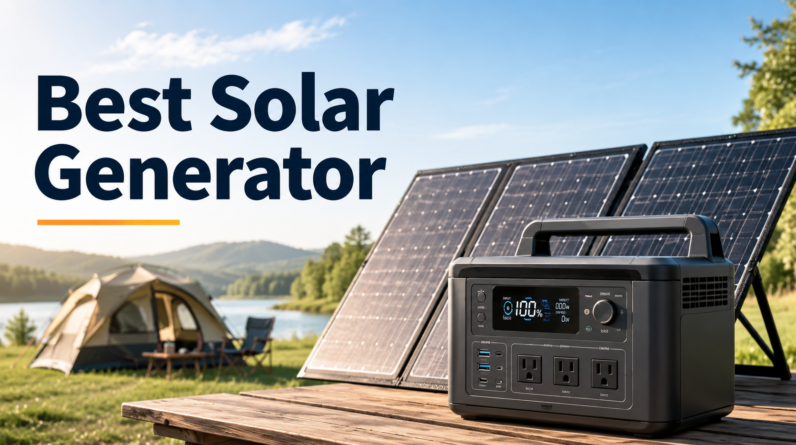
Solar generators integrate all necessary components – charge controller, battery, battery management system (BMS), and inverter – into a single, transportable device. These complete solar systems arrive ready to use straight from the box, eliminating the planning and assembly required for component-based installations.
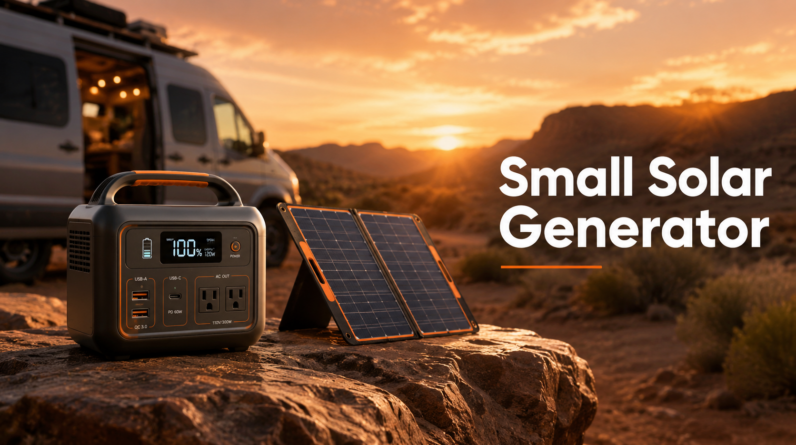
The all-in-one design makes solar generators ideal for remote locations without traditional power access, including weekend cabins, camping trips, and RV adventures. Their plug-and-play nature means users can start generating power immediately without technical expertise or professional installation.
Most solar generators feature compact, lightweight construction optimized for transport. This portability advantage comes with built-in charging flexibility, supporting multiple power sources including AC outlets, car chargers, and direct solar input. The versatility proves invaluable when power source situations change unexpectedly.
Battery Banks Offer Massive Expandable Storage Capacity
Battery banks provide substantial energy storage designed for permanent installations and long-term power needs. Unlike solar generators, these systems separate components allow for custom configuration matching specific energy requirements and usage patterns.
Battery Banks Scale by Adding More Units
The expandable nature of battery banks represents their greatest strength. Users can start with basic capacity and add more batteries as energy demands increase. This scalability makes battery banks suitable for powering entire homes or businesses during extended outages or in areas with unreliable grid connections.
Modern lithium iron phosphate (LiFePO4) batteries have gained popularity in off-grid systems due to their longer lifespan (typically 3,000-5,000 cycles compared to 300-500 cycles for lead-acid) and superior performance compared to traditional lead-acid alternatives. These advanced batteries eliminate common issues like battery anxiety and constant maintenance requirements associated with older technologies.
Professional Installation Usually Required
Battery bank installations typically require professional expertise, especially for larger residential or commercial systems. The complex wiring, safety considerations, and integration with existing electrical systems demand specialized knowledge and proper permits in most jurisdictions.
Cost Comparison: Upfront vs Long-Term Value
Cost differences between solar generators and battery banks reflect their intended applications and capacity levels. Understanding both initial investment and long-term value helps determine the most economical choice for specific situations.
Solar Generators Cost Less Initially
Solar generators offer lower barrier to entry, with smaller units available for immediate purchase and use. The integrated design eliminates separate component costs and professional installation fees, making them attractive for budget-conscious consumers seeking quick power solutions.
Battery Banks Range $9,000-$19,000 Plus Installation
Complete battery bank systems represent significant investments, with costs ranging from $9,000 to $19,000 before installation expenses. A typical solar panel system with battery backup costs between $25,000 and $30,000 before tax credits, including equipment, installation, and permits. The battery portion alone can range from $10,000 to $20,000 before incentives.
Professional installation adds substantial expense, as these systems require electrical expertise, proper permits, and safety compliance. The total investment reflects the permanent, high-capacity nature of these installations.
Battery Banks Become More Cost-Effective at Scale
Despite higher upfront costs, battery banks offer better cost-to-power ratios for large-scale applications. Their expandability and longer lifespan create favorable economics for permanent installations requiring substantial energy storage capacity.
Charging Speed and Power Source Flexibility
Charging characteristics differ significantly between solar generators and battery banks, affecting how quickly systems replenish stored energy and adapt to various power sources.
Solar Generators Offer Multiple Charging Options
Solar generators excel at charging versatility, accepting power from solar panels, AC wall outlets, and car chargers. This flexibility proves invaluable when solar conditions are poor or alternative power sources become available. The integrated charging systems automatically manage power input from multiple sources.
Battery Banks Charge Faster with High-Capacity Systems
Battery banks require separate charging components but can charge more quickly when connected to high-capacity systems. Large solar arrays and powerful charge controllers can potentially halve grid-power charging times compared to solar generators, making them efficient for rapid energy replenishment.
Maintenance Requirements Differ Significantly
Maintenance demands vary considerably between solar generators and battery banks, influencing total ownership costs and user involvement over system lifespans.
Solar Generators Need Minimal Maintenance
Solar generators require minimal ongoing maintenance due to their integrated design and factory optimization. Most maintenance involves basic cleaning, checking connections, and occasional firmware updates through manufacturer apps. The enclosed systems protect components from environmental exposure and user error.
Battery Banks Require Regular Monitoring and Care
Off-grid solar systems with battery banks demand regular maintenance to ensure optimal performance and longevity. For lead-acid battery systems, users must measure battery specific gravity using a hydrometer every six months, or ideally every three months, to determine battery health and prevent premature failure. LiFePO4 batteries require less frequent monitoring but still benefit from periodic capacity checks.
Professional maintenance for lead-acid systems includes equalization procedures – controlled overcharging that brings each cell to full charge, reducing stratification and sulfation. Some manufacturers recommend equalization every six months to maintain peak battery performance in lead-acid installations.
Temperature Control Important for Battery Bank Longevity
Maintaining proper temperature conditions proves important for battery bank longevity. Extreme temperatures adversely affect battery performance, necessitating well-ventilated areas and proper insulation. Battery banks benefit from stable temperature environments to achieve maximum lifespan.
Choose Solar Generators for Portability, Battery Banks for Permanent Power
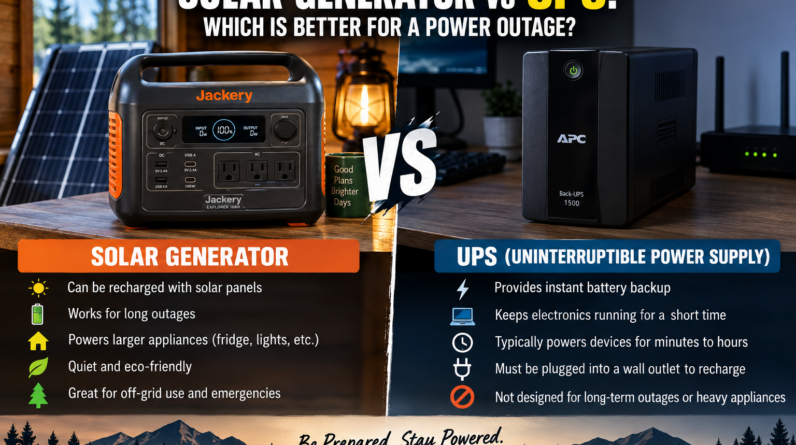
The decision between solar generators and battery banks ultimately depends on specific power requirements, mobility needs, and long-term energy goals. Solar generators serve temporary, portable applications where convenience and immediate setup matter most. Their integrated design and minimal maintenance make them perfect for camping, RVs, and emergency backup situations.
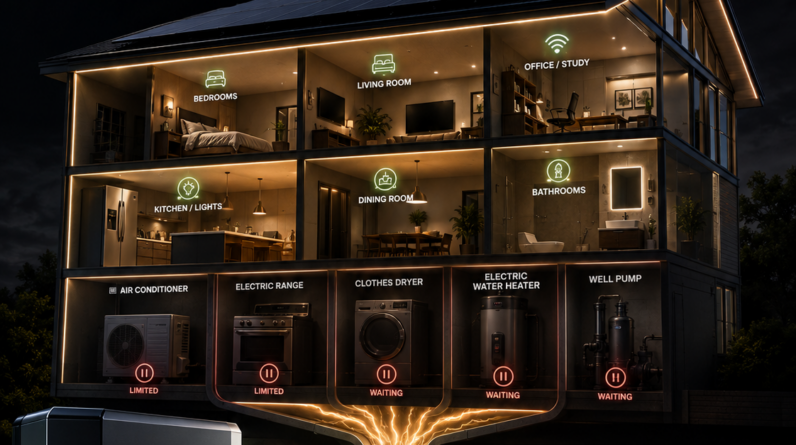
Battery banks excel in permanent installations where high capacity, expandability, and long-term value justify higher initial investments. They provide the substantial energy storage necessary for off-grid living, whole-home backup power, and commercial applications requiring extended runtime capabilities.
Consider solar generators when portability, simplicity, and lower upfront costs align with your power needs. Choose battery banks when permanent installation, high capacity, and long-term energy independence represent your primary objectives.
Professional consultation can help determine the perfect energy system for your specific needs and local conditions.
This post contains Amazon affiliate links.