This post contains Amazon affiliate links.
Is a Solar Generator Necessary for Short Outages? Read On!
Power outages are annoying, but not all outages are created equal. Some last a few minutes. Others stretch into hours or days. When people start looking at backup power options, one of the most common questions is whether a solar generator is actually necessary for short outages or if simpler solutions are enough.
The answer depends less on the technology and more on how you live, what you need powered, and how disruptive a short outage really is for you.
This post breaks it down in practical terms so you can decide if a solar generator is worth the investment or if a smaller setup makes more sense.
What counts as a short outage?
A short outage usually falls into one of these categories:
• 10 minutes to 1 hour
• 1 to 3 hours
• 3 to 6 hours
In most regions, these are the most common outages caused by storms, grid maintenance, or local equipment failures.
Short outages are inconvenient, but they rarely require running major appliances. Most people just want to:
• Keep phones charged
• Use the internet if available
• Run lights
• Power a laptop or TV
• Keep essential medical devices working
This is where the solar generator question comes in.
What is a solar generator really designed for?
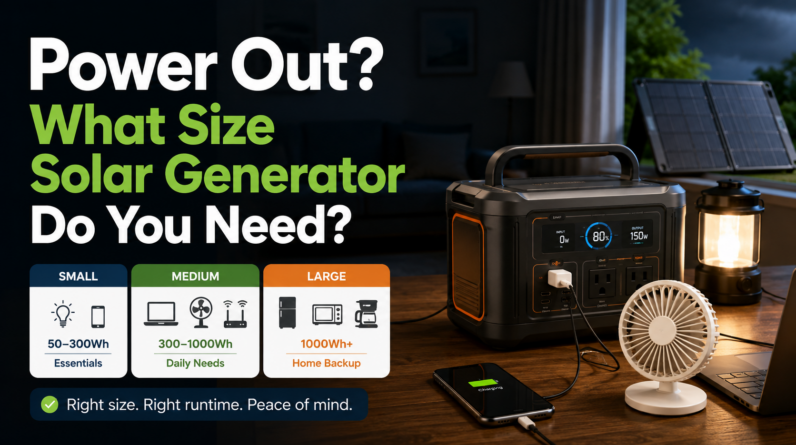
A solar generator, more accurately called a battery power station, is a large rechargeable battery with multiple output options. It can power AC devices, DC devices, and USB devices. It can be recharged from the wall, a vehicle, or solar panels.
Solar generators are designed for:
• Medium to long outages
• Off grid living
• Running multiple devices at once
• Powering medical equipment
• Camping or remote work setups
They shine when power is out for a full day or longer and when you need more than just phone charging.
When a solar generator is probably overkill
For most short outages, a solar generator is more than you need.
If your main concerns are:
• Charging phones
• Using a flashlight
• Keeping a laptop running
• Watching TV for a few hours
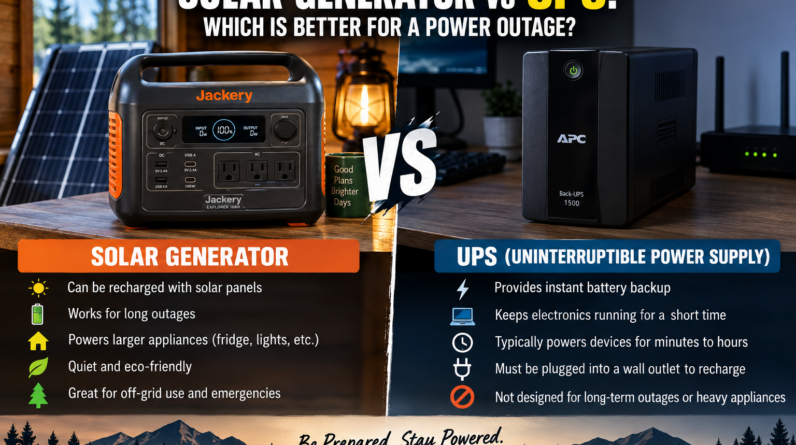
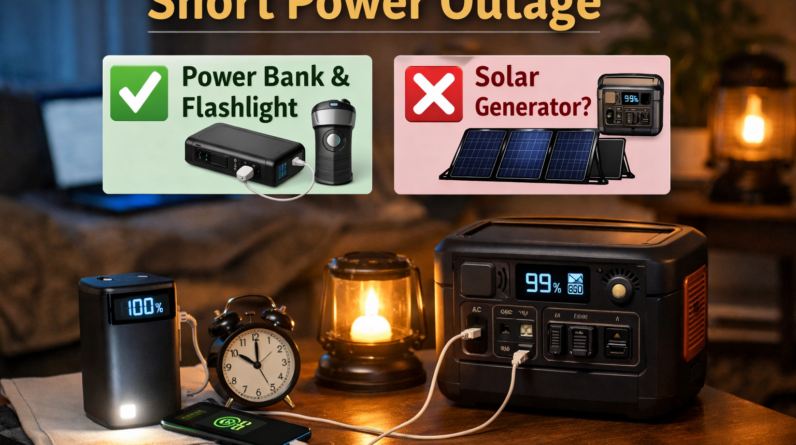
Then a basic power bank, UPS, or small solar charger will handle all of that easily.
Spending hundreds or thousands on a solar generator just to cover a one hour blackout usually does not make sense.
In these cases, the solar generator sits unused most of the time while cheaper tools solve the same problem.
Cheaper alternatives that work better for short outages
Power banks
A high capacity power bank can keep phones and tablets charged for several days. They are cheap, simple, and require no setup.
For most short outages, this is the best solution.
UPS systems
An uninterruptible power supply is ideal for computers and internet equipment. It keeps devices running instantly when power drops and prevents data loss.
If your main worry is your computer shutting off, a UPS beats a solar generator every time.
Small solar chargers
A small solar charger adds a layer of insurance. If the outage lasts longer than expected, you can still generate power during daylight.
This combination covers almost all short outage scenarios.
When a solar generator actually makes sense for short outages
There are a few cases where a solar generator is justified even for short outages.
Medical equipment
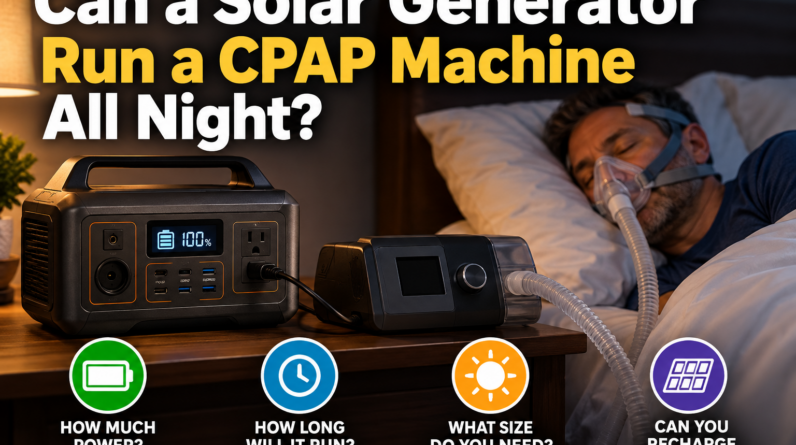
If you rely on CPAP machines, oxygen concentrators, or other medical devices, having a solar generator provides peace of mind even for brief outages.
In this case, reliability matters more than cost.
Remote work
If your income depends on staying online, a solar generator can keep your entire workstation running including monitors, routers, and laptops.
A short outage that costs you clients or deadlines is more expensive than the generator itself.
Unstable grids
In areas with frequent outages, short outages often turn into long ones. A solar generator prevents constant stress and device juggling.
Extreme weather zones
If storms regularly knock out power, what starts as a one hour outage can easily become an overnight one.
Solar generators handle uncertainty better than small devices.
The psychology of preparedness
Many people buy solar generators not because they strictly need them for short outages, but because they want a complete solution that removes decision making.
They want to plug in anything and not think about:
• Which device to charge first
• Battery percentages
• Extension cords
• Device limits
A solar generator gives a feeling of control. Whether that feeling is worth the price depends on your personality and risk tolerance.
Some people prefer simple systems and minimal spending. Others prefer having excess capacity and never worrying.
Neither approach is wrong.
Cost versus actual usage
This is where most buying mistakes happen.
A typical solar generator setup costs anywhere from $500 to $3000 or more.
If you experience:
• Two or three short outages per year
• Each lasting under two hours
• No medical or work critical needs
Then your actual cost per hour of use becomes extremely high.
In contrast, a $50 to $100 power bank may cover the same real world needs.
A smarter layered approach
For most people, the best solution for short outages is a layered setup:
• One or two high capacity power banks
• A small UPS for internet and computers
• A compact solar charger for backup
This setup costs a fraction of a solar generator and solves 90 percent of short outage problems.
If outages later become longer or more frequent, upgrading to a solar generator still remains an option.
Final answer
Is a solar generator necessary for short outages?
For most people, no.
Short outages are best handled with simple, affordable tools like power banks and UPS systems. Solar generators are powerful, but they are designed for bigger problems than a few hours without power.
A solar generator becomes necessary when outages affect health, income, or safety. In those cases, the investment makes sense.
For everyone else, smaller solutions are usually more practical, easier to manage, and far more cost effective.
This post contains Amazon affiliate links.